

From the mid-19th century, advances in modern weaponry and medicine for combating tropical diseases allowed European explorers, missionaries, and traders to venture into the interior of Africa. Their reports of the continent’s vast natural resources attracted European powers eager for raw materials to fuel industrial development, thus initiating the so-called “Scramble for Africa.”
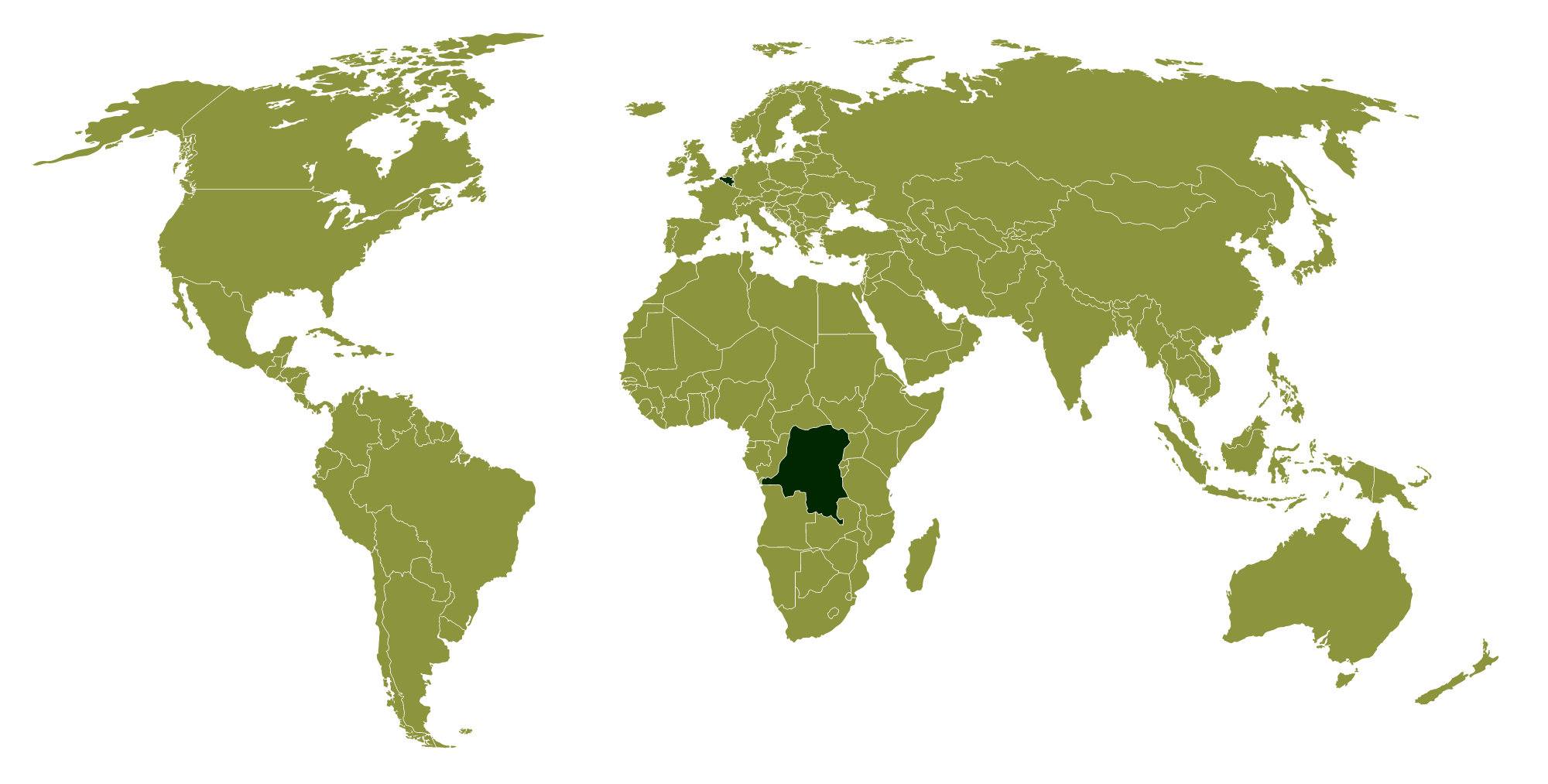
Reports by American explorer Henry Morton Stanley about the riches along the Congo River reached Belgian King Leopold II, who hired Stanley to advance his interests. Stanley deceitfully secured signatures from local leaders, granting rights to their land, setting the stage for the creation of the Congo Free State.
At the Berlin Conference (1884/85), thirteen European nations and the United States agreed to divide Africa among themselves. Through diplomatic maneuvers, Leopold secured personal ownership of a vast area of the Congo, which was home to around 20 million people and spanned more than two million square kilometers. Under the guise of benefiting the local population and promoting scientific research, Leopold and his administrators brutally exploited the land and people. The situation worsened with the invention of the pneumatic tire in 1887, which drove up demand for rubber—a resource the Congo had in abundance. Because firearms and ammunition were expensive, soldiers were instructed to provide a severed hand of the person killed for each bullet used. However, soldiers would cut off the hands of living people to justify their use of bullets. This practice was also used as punishment for failing to meet rubber quotas.
Conquest, exploitation, forced labor, punitive expeditions, population displacement, epidemics, and the neglect of agriculture led to the deaths of millions of Congolese. Under international pressure, Leopold ceded control of the Congo to the Belgian government in 1908. The colonial regime continued to exploit the region’s resources, with independence achieved only in 1960.
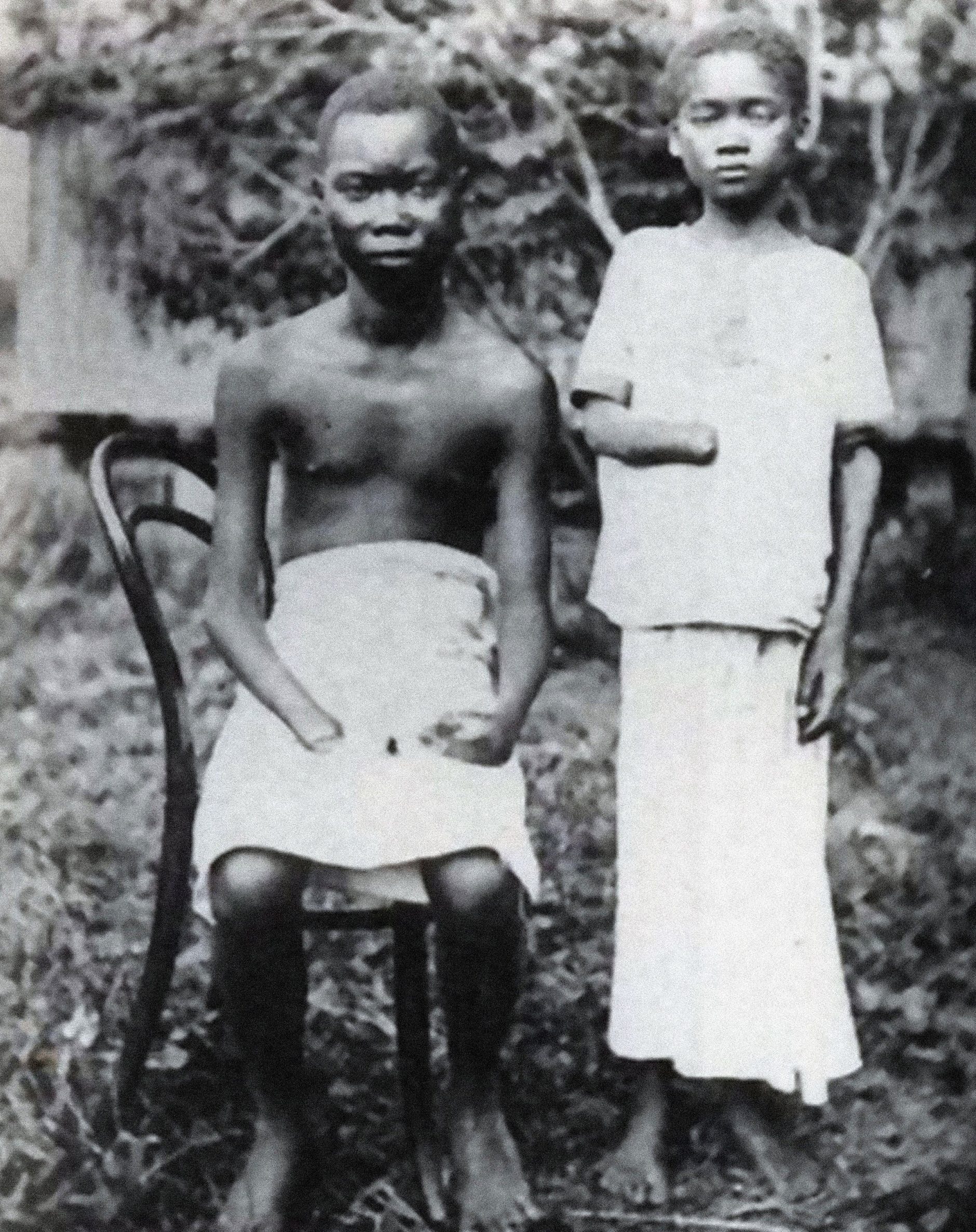
Mola and Yoko, victims of crimes committed in the Congo Free State, around 1900.