
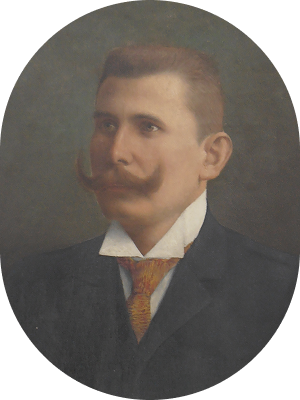
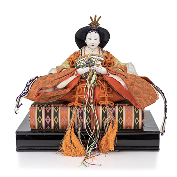
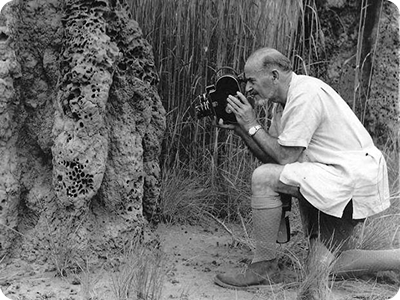

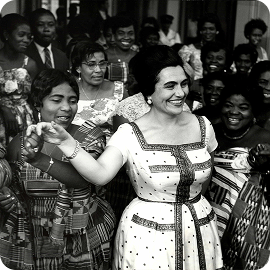

The virtual exhibition “Travelers” accompanies the museum exhibition of the same name (EMZ, 2024–2027), which presents the Collection of Non-European Cultures of the Ethnographic Museum, following the journeys of people and objects from colonial times to the present day.
The origins of the Collection date back to the mid-19th century, when the National Museum in Zagreb was founded during the Croatian National Revival. At that time, many museums in Europe were established to define national identities. Objects from Croatian material and intangible culture were meant to testify to its rich cultural heritage, while items from non-European cultures were used to position Croatia alongside the great European colonial powers. Croatia held a dual position in global processes. While the West viewed Croatia as an exotic “Other,” the local people, adopting colonial cultural stereotypes, regarded non-European peoples and their cultures similarly.
In the introductory section of the exhibition, we highlight the connection between colonialism, the creation of national museums, collections of non-European artifacts, and the beginnings of ethnology and cultural anthropology as fields of academic study. The relationship between museums and colonialism has long been a central theme in museums worldwide, so we address some of the approaches to exhibiting and engaging with colonial heritage. While the older part of the Collection can be directly linked to colonialism, items collected in the second half of the 20th century should be viewed within the context of Yugoslav anti-colonial policy and the Non-Aligned Movement. By emphasizing specific donors, we aim to shed light on the historical contexts in which they operated and created their collections, which opens many topics for discussion during the exhibition.
As a counterpoint to the explorations of non-European cultures, we present contemporary ethnographic research of the scholarly project ERIM – The European Irregularized Migration Regime at the Periphery of the EU (2020-2024).
In working on the Collection, we have become aware of the necessity of involving individuals, communities, associations, and institutions from the originating countries of the objects. The prerequisites for cooperation are transparency and accessibility of the Collection, which have been a focus of intensive efforts in recent years. With this exhibition, we aim to encourage a broader discussion about the ways of interpreting and exhibiting the Collection, its social relevance, and its future.