


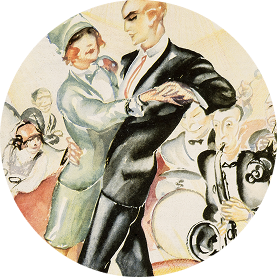

(…) I have made it my life’s mission life to turn the products of Croatian cottage industry into items of global trade.
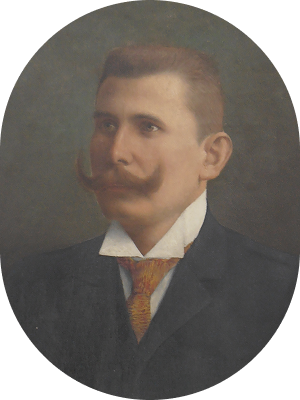
SALAMON BERGER
Salamon Berger (1858–1934) was a collector, merchant, entrepreneur, and the first director of the Ethnographic Museum. Of Slovak Jewish descent, he was forced to leave school and start working in a store after his father’s death. At the age of 16, he moved to Croatia, first to Baranja, then to Sisak, and in 1876 to Zagreb. There, he began assembling a collection of ethnographic objects and items of artistic craftsmanship, as well as promoting cottage industries related to weaving and woodworking.
At the turn of the 20th century, the Orientalist fashion trend sweeping Paris and Vienna took on a local form in Croatia. This self-Orientalism was reflected in the products of Salamon Berger’s industry, labeled “Croatian Peasant Cottage Industry.” However, due to unfavorable political conditions and other factors, Berger was forced to close his production in 1908. One of the reasons was that Zagreb’s fashion scene favored Japanese Orientalism over the local variety offered by Berger. He then shifted his focus to expanding his collection further. In addition to folk costumes, textiles, handicrafts, and artworks from Southeast Europe, he also collected items from China, Japan, India, Iran, and other countries, acquiring them at colonial and international trade exhibitions and through dealers. Berger’s items became the initial collection of the Ethnographic Museum’s holdings, and from 1925 until his death, he held the honorary title of director while remaining actively involved in the museum’s work.


Croatian Peasant Cottage Industry
At the height of his business, Berger employed around 1,400 women who produced luxury clothing and other items adorned with folk motifs adapted to urban fashion. He utilized traditional weaving techniques, particularly valuing the “prebor u zijev” technique, which he referred to as an ancient Egyptian or Coptic technique. For Berger, the collection was not only valuable for its aesthetic and rarity, but also for its practical significance in production.
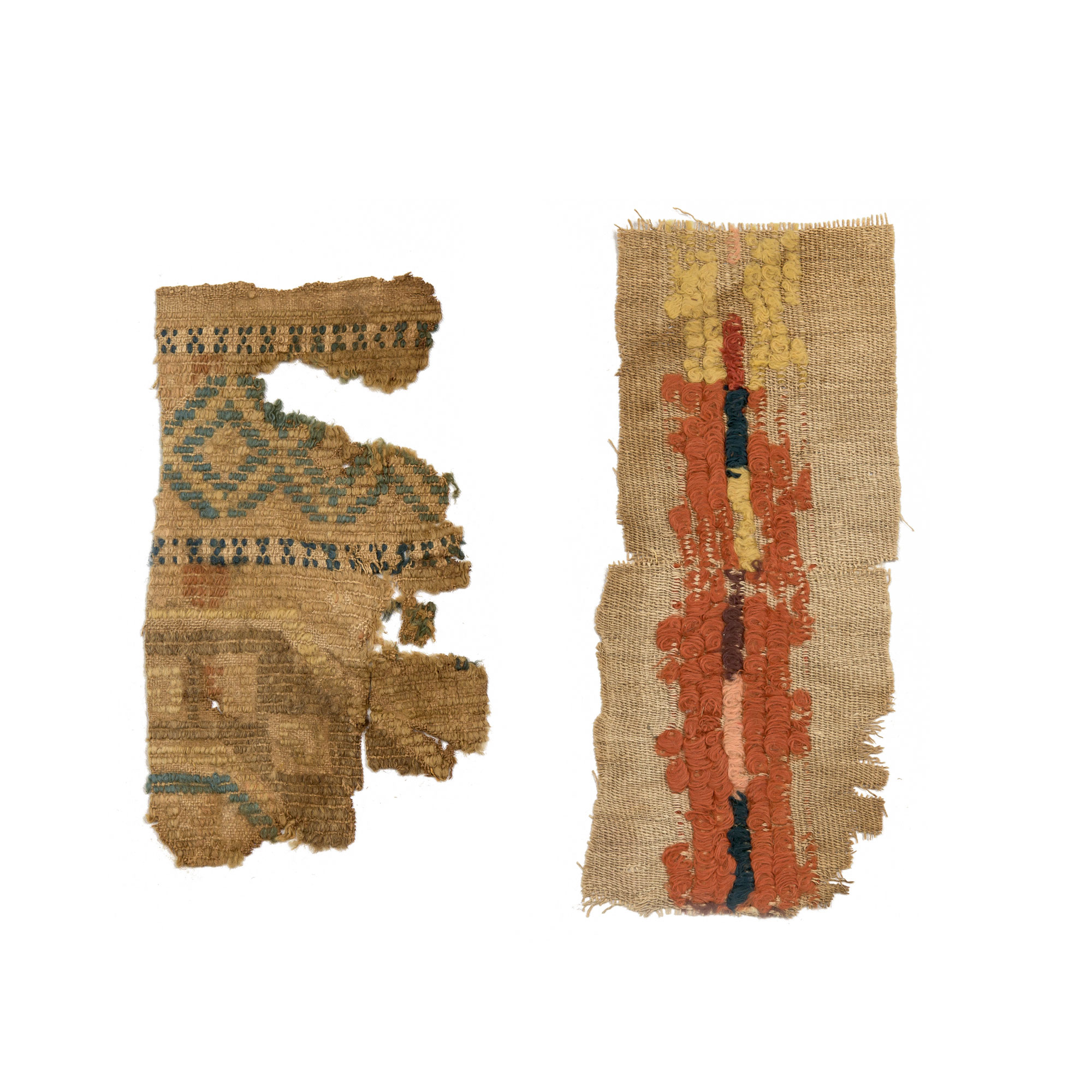
Fragment of Coptic fabric from Egyptian tombs. 4-5th c.
EMZ-EX1868
Such objects represented an important contribution to the spread of craftsman and industrial technology and were collected in museums alongside locally woven and embroidered fragments.
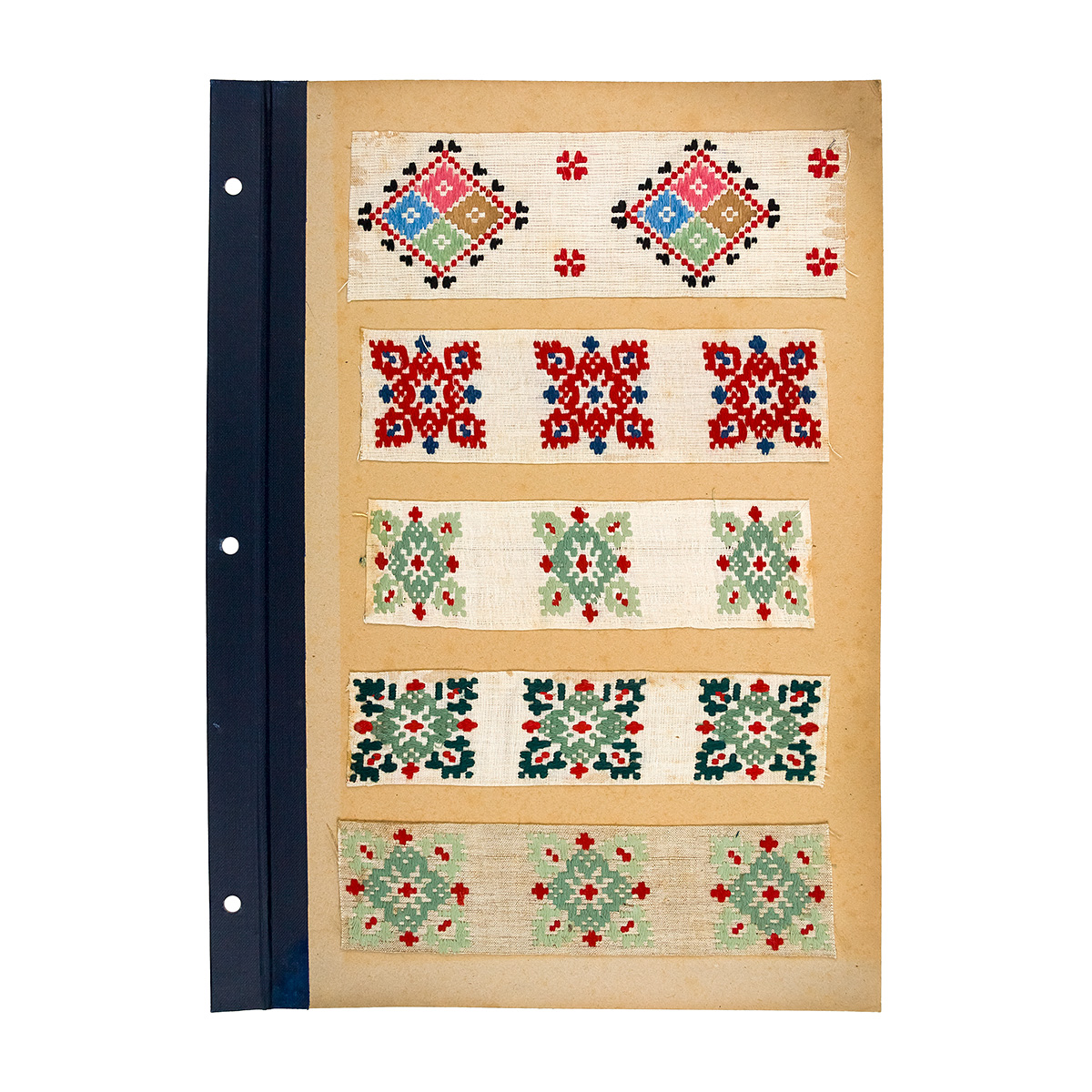
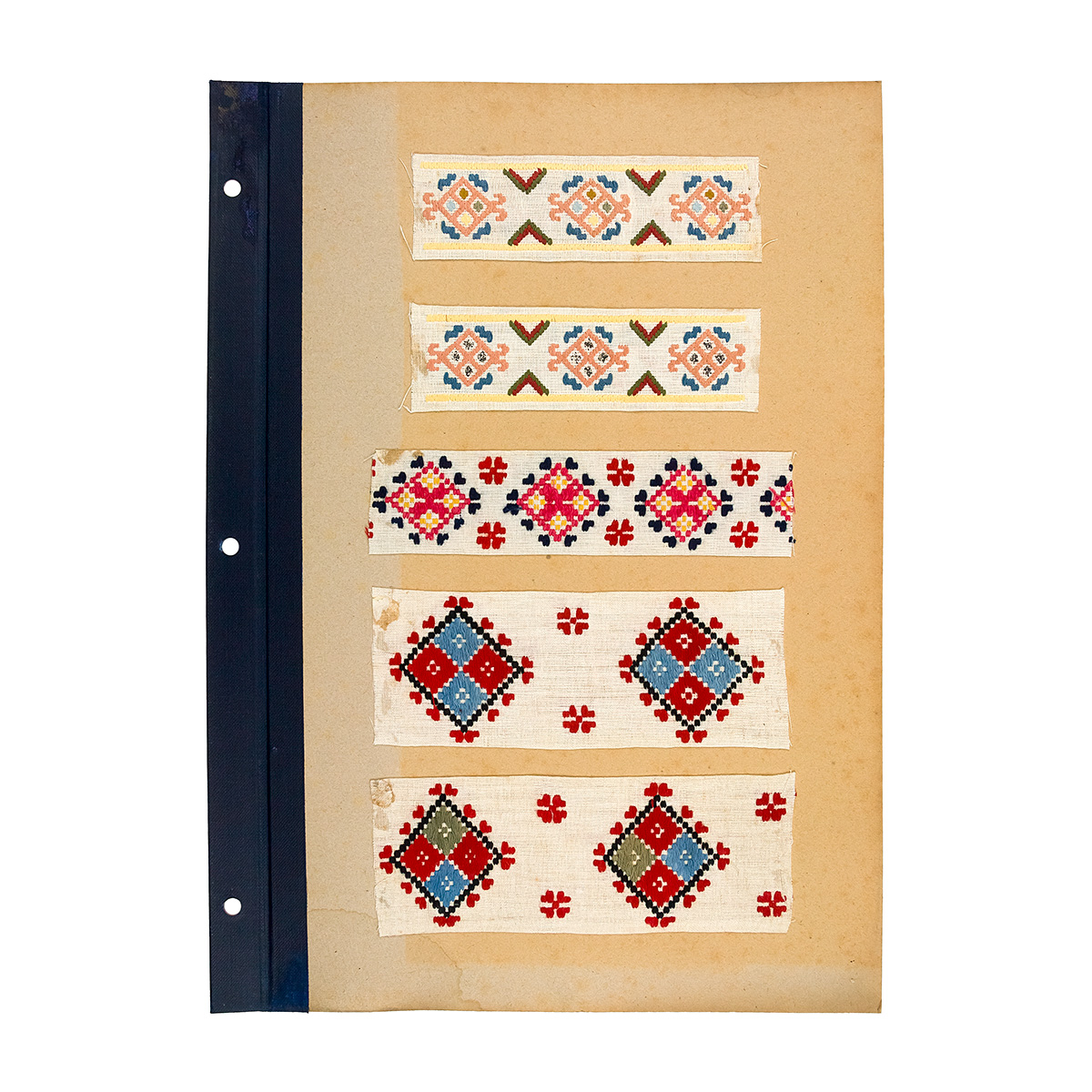
Album of textile samples from “Industrija Berger.” Zagreb, early 20th c.
EMZ-EX52868-1-120
Fashion samples from the trade catalog of Industrija Berger, inspired by folk ornamentation. They were marketed at the height of the Orientalism trend and the fashion of intense colors.
Hem, product of the “Industrija Berger” textile business. Zagreb, early 20th c.
EMZ-EX7970
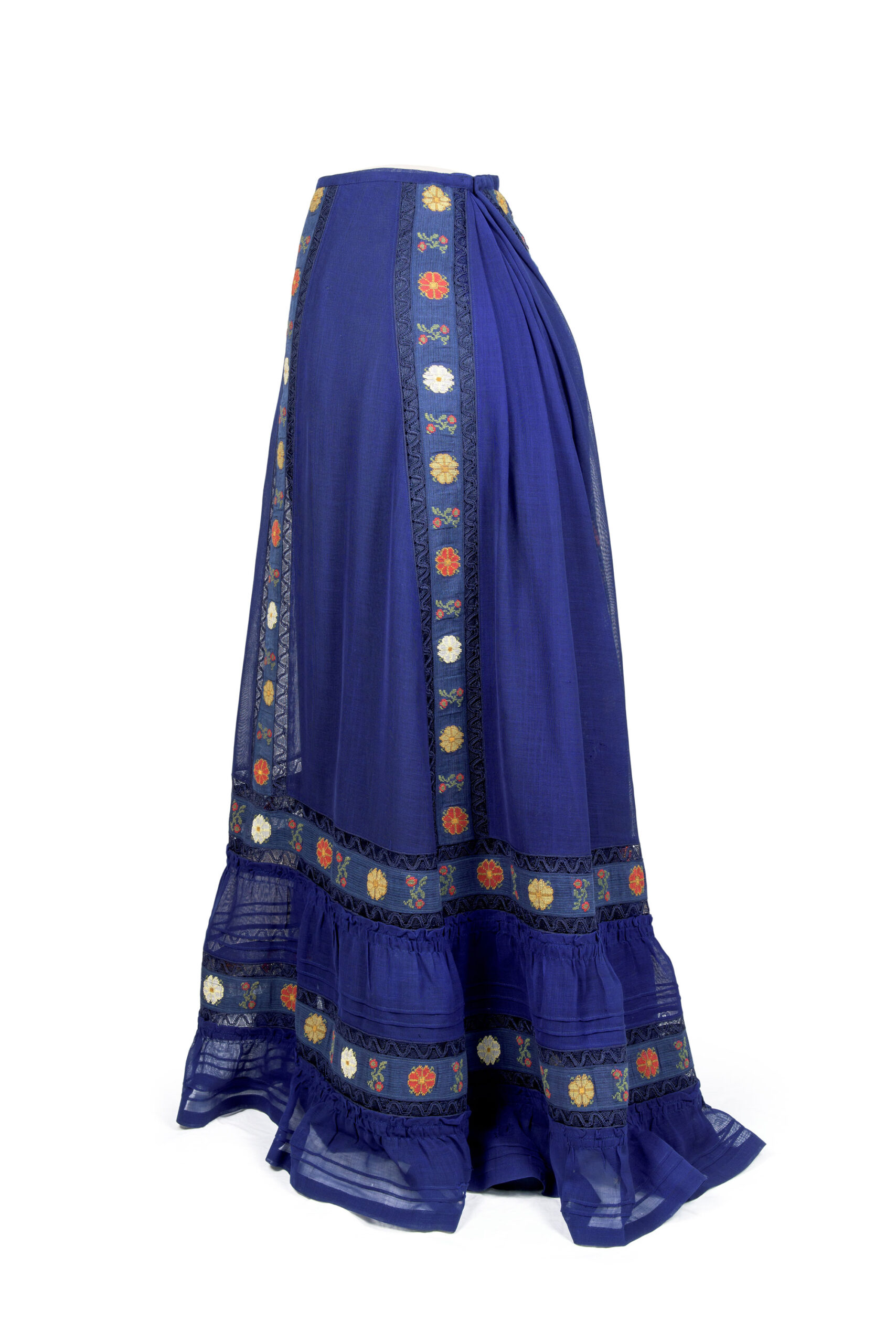
Skirt, product of the “Industrija Berger” textile business. Zagreb, early 20th c.
EMZ- 2/7775
This skirt is made of fine indigo-dyed wool with embroidered hems by “Industrija Berger” using multicolored cotton threads in a heddle weaving technique called “prebor u zijev.” It reflects the spirit of Art Nouveau fashion.


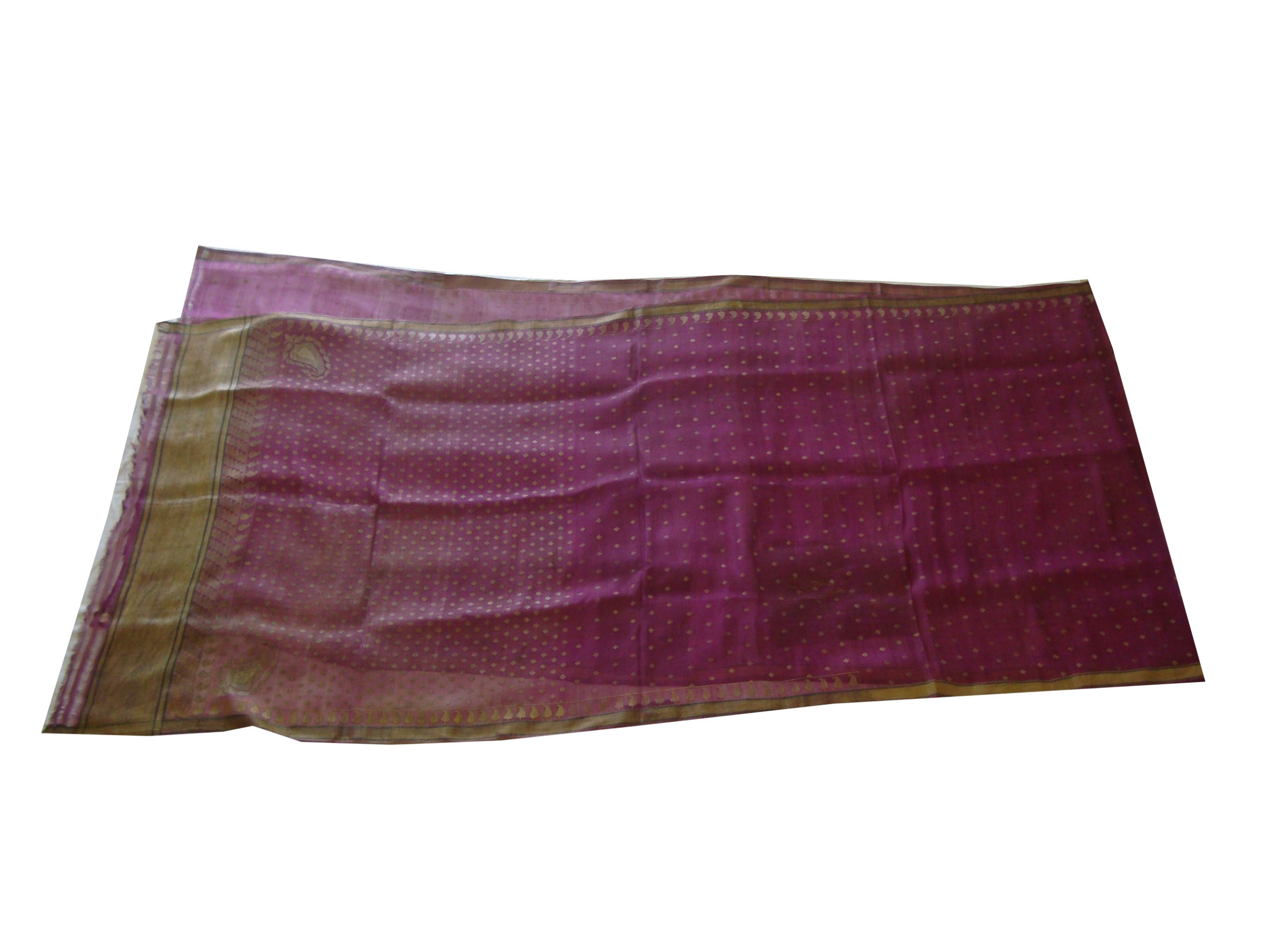
Shawl, batik. Syria, 19th c.
EMZ-EX1725
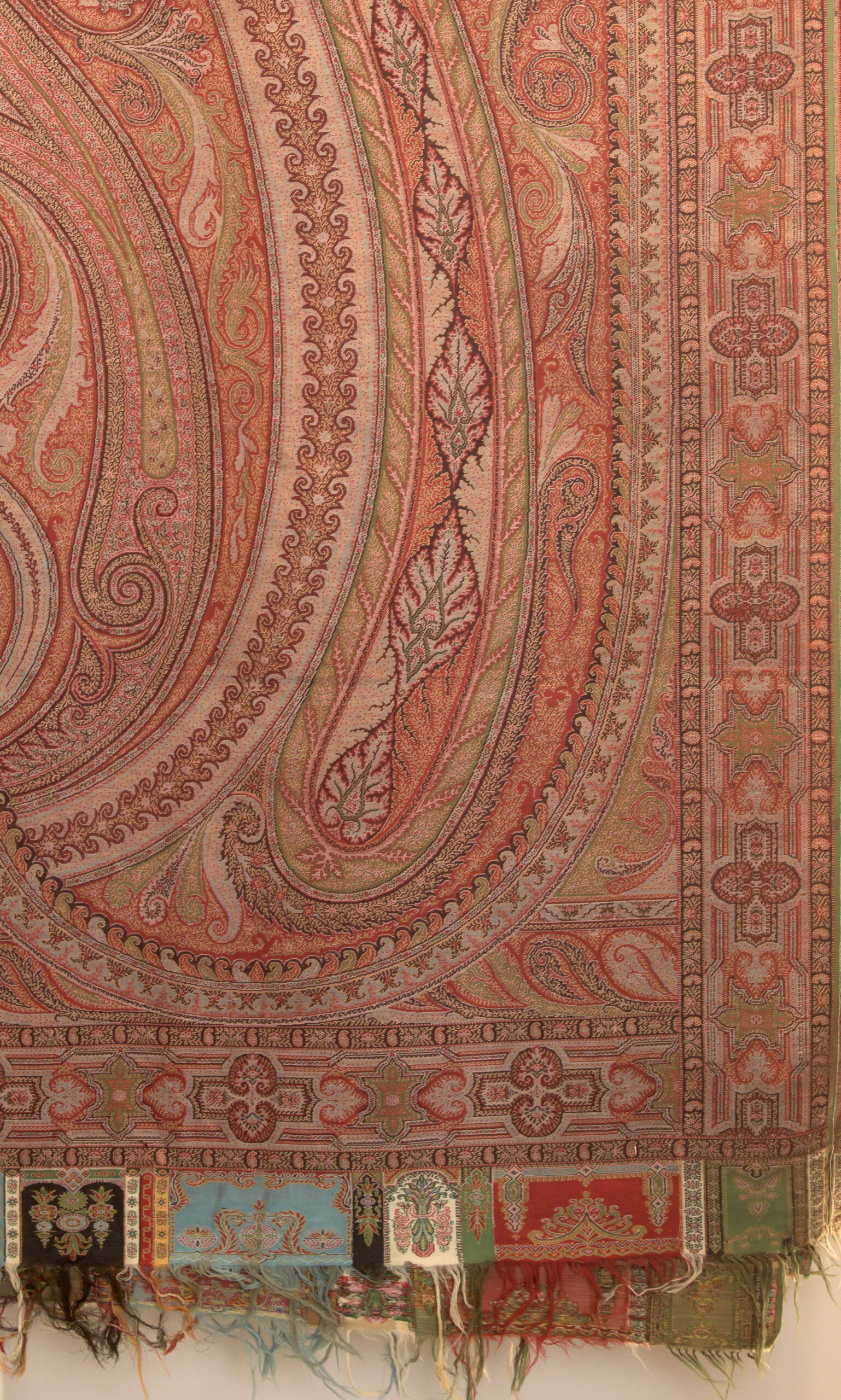
Shawl. India, 19th c.
EMZ-EX1751
Kashmiri shawls are renowned as refined items of men’s clothing at the court of Mughal Emperor Akbar (reigned 1555–1605). They became fashionable garments in Europe in the late 18th century, reaching peak popularity during the first half of the 19th century, when the traditional pattern was stylized to suit European tastes. The displayed shawl was woven in India for the British and European markets in the 19th century.
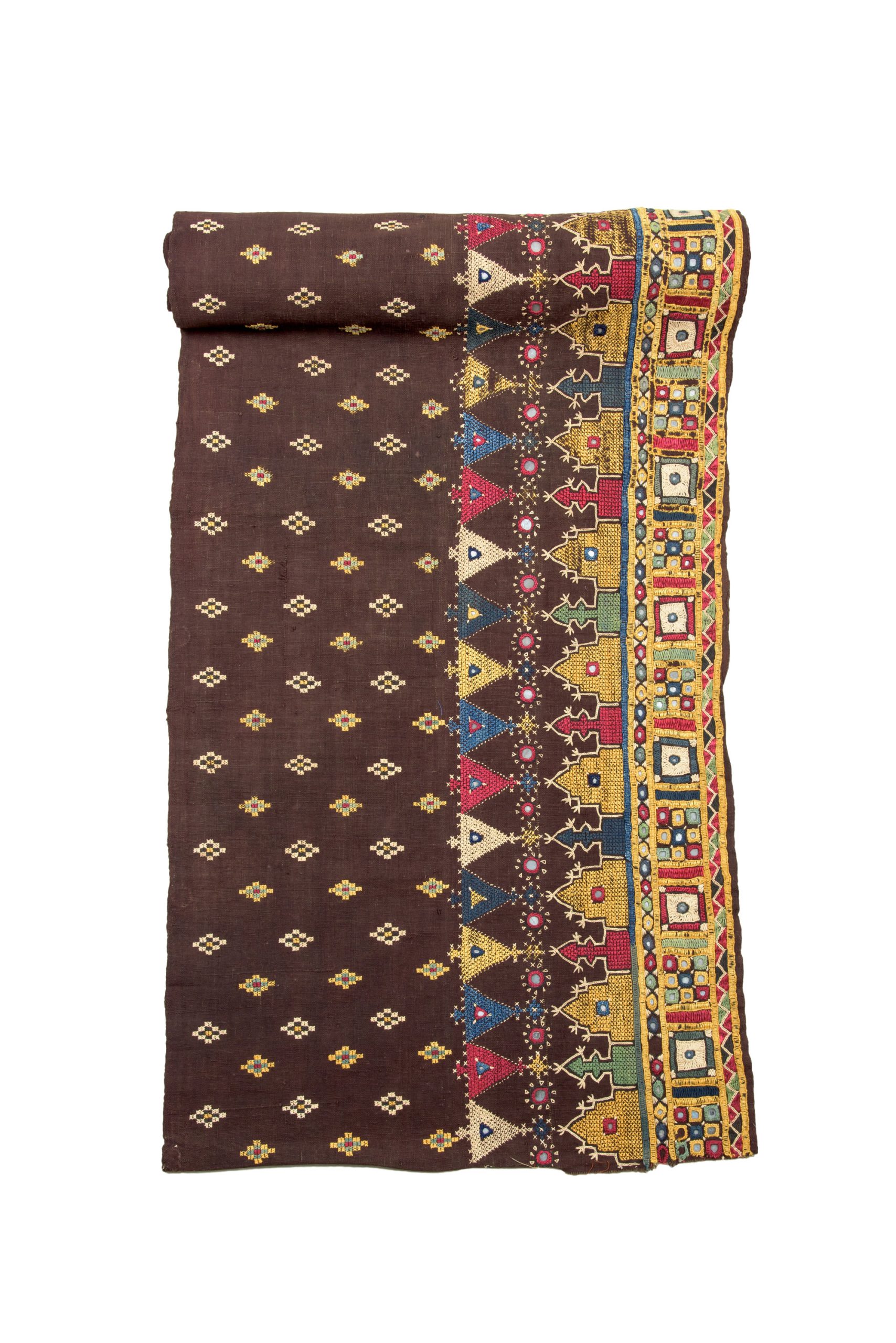
Fabric. Kutch, Gujarat, India, 19th c.
EMZ-EX1733
A brown cotton fabric decorated with woven and embroidered motifs using multicolored silk and white cotton thread.
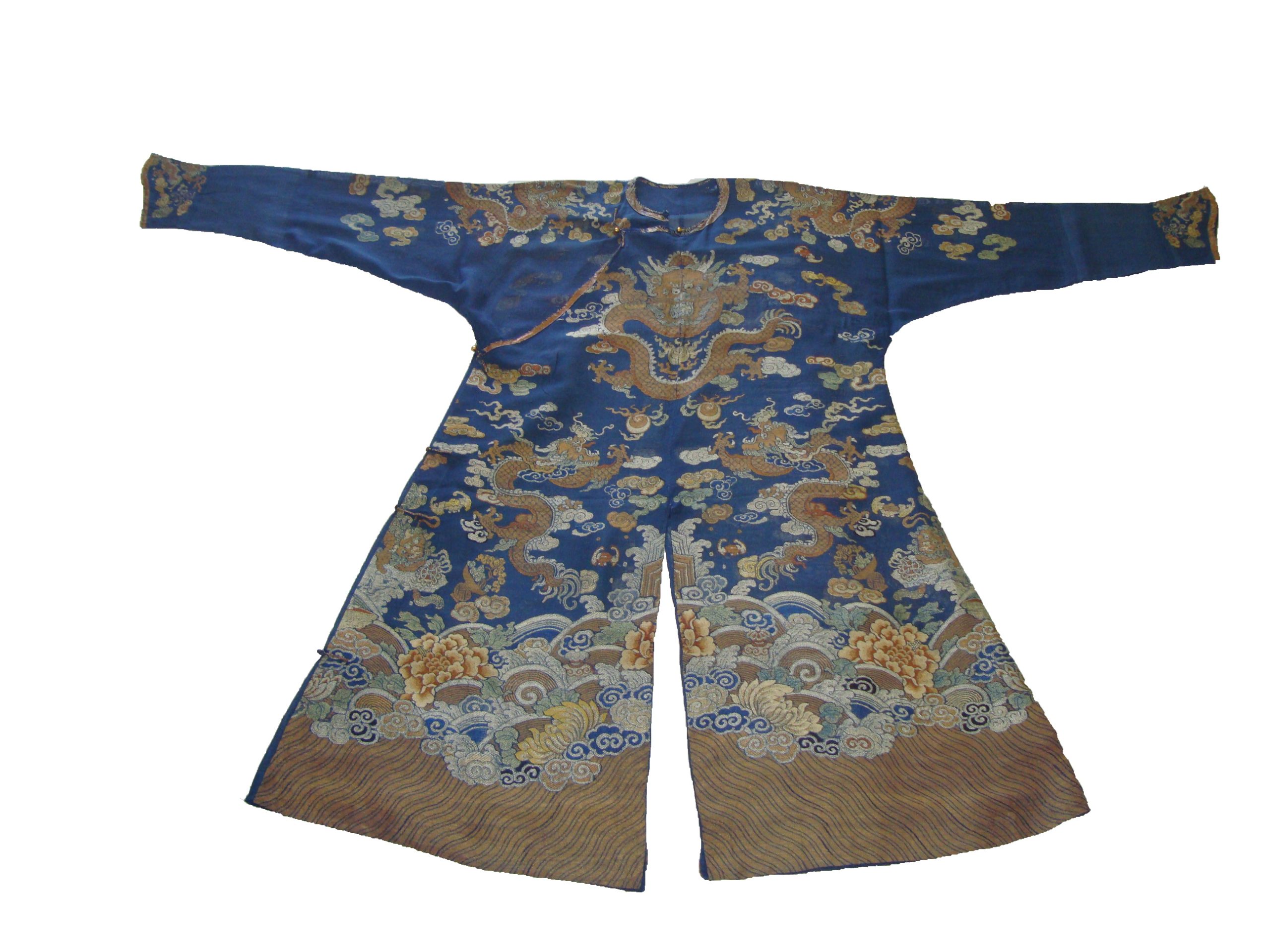
Robe. China, 19th c.
EMZ-2/7120
This informal summer court robe is made of dark blue silk adorned with woven decorations created with multicolored silk and gilded threads. The main motif consists of a four-clawed snake/dragon (mang) chasing flaming pearls amidst clouds. There is a wave design near the border. This robe was intended for a prince of the first or second rank.
When the Manchu dynasty assumed power in China in 1644, a new style of formal and semi-formal clothing emerged, reflecting Manchu traditions and worn by both Manchus and Han Chinese. The robes were fastened to the right side of the body, and Manchus wore robes with four slits at the bottom, while Han Chinese were limited to two, as seen in this example. The long, wide sleeves were replaced by narrow ones divided into three parts. The upper sleeve is integrated into the main section, the central dark blue part covers the forearm, and the wrist is protected by a horseshoe-shaped cuff. The slits at the bottom facilitated horseback riding.
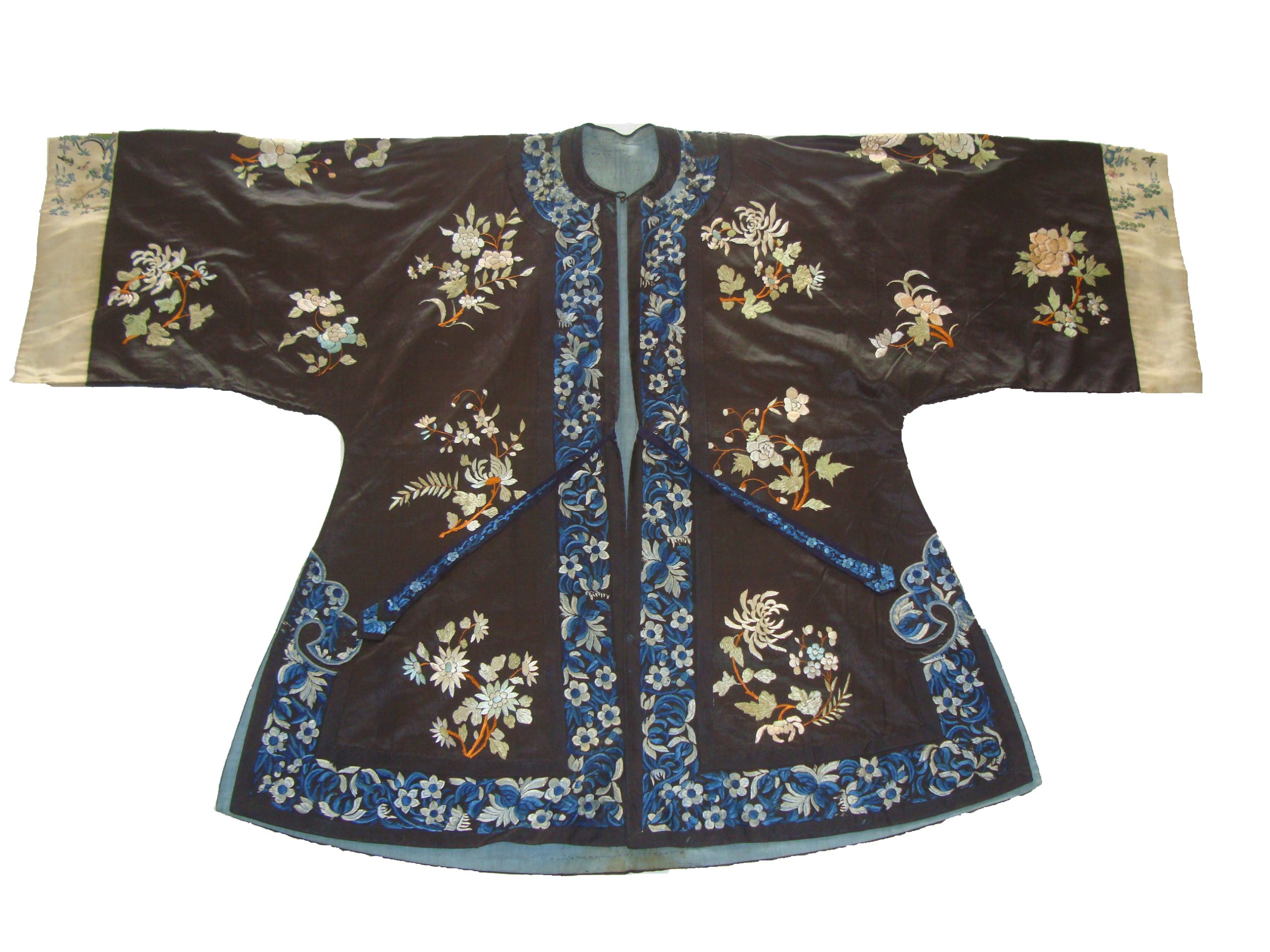
Jacket. China, 19th c.
EMZ-2/7137
This women’s jacket is made of black atlas lined with light blue cotton fabric. It is decorated with floral motifs created with silk threads with a free embroidery technique. The sleeve edges are made of white silk, adorned with multicolored silk threads in the shape of a human figure surrounded by flora.

Women’s skirt. China, early 20th c.
EMZ-EX1758
The skirt is made of red and blue silk, flat in the front and back, but densely pleated at the sides and secured in a wide linen band. Decorated with floral motifs created with silk thread with a free embroidery technique.
The mamianqun (or “horse-face skirt”) holds a significant place in the history of traditional Chinese clothing, as it was the most common skirt style across nearly all Chinese regions for over 500 years. Originating from the Song Dynasty (960-1279), it retained its popularity through the Ming and Qing Dynasties (1368-1911).
Given its material, design, and decoration, it could be worn both daily and on formal occasions. In Dior’s Autumn 2022 collection, a skirt described as a “fascinating exploration of past, present and future” drew attention from Chinese media, who identified it as a traditional Chinese skirt and accused Dior of cultural appropriation, leading to its withdrawal from sale.