

Mother of Pearl
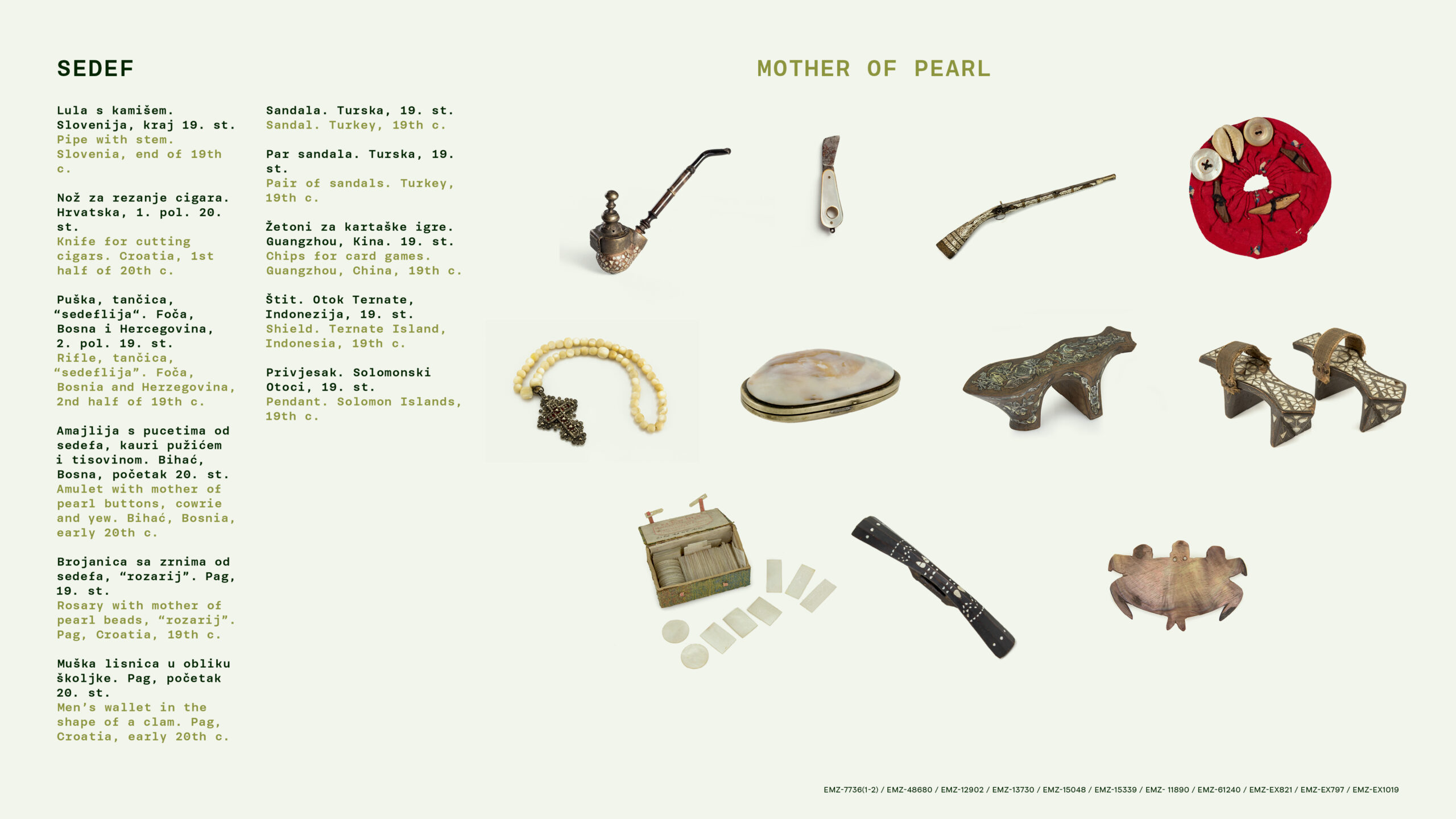
Click the image to enlarge
Mother of pearl, or nacre, is the iridescent inner layer of certain mollusk shells, displaying a spectrum of colors. It has been used worldwide to make decorative items, buttons, and inlays on furniture.
Museum collections are filled with objects adorned with mother of pearl, but beneath the pearly sheen lies a dark story of “ocean commodification” and exploitation of Indigenous populations in Australia and Asia. Trade in pearls and mother of pearl among Australia’s Indigenous people occurred long before European contact, which only began in the 1850s when Europeans discovered large oyster and mollusk populations along these shores. From then until World War I, the port of Broome became the world’s capital for mother of pearl exploitation, marked by a brutal slave system that forced Indigenous people and prisoners into hazardous freediving to gather mother of pearl. When official slavery had already been abolished, a practice called “blackbirding” emerged in the South Pacific islands, where local populations were kidnapped to meet global demands for this material. The fascination with mother of pearl was fueled by high demand in pre-industrial fashion, especially for decorative buttons, which only declined with the invention of plastic. Only recently have discussions and research emerged on this topic, with European museums playing a crucial role by agreeing to repatriate human remains of pearl divers once held in their collections.